Exams and certificates
One programme, one exam, one certificate. Watch the recordings, pass the final exam, and a Certificate of Completion is issued to you automatically.
Stay signed in throughout. Watching is what records that you saw the material, and a certificate has to name someone.
The three steps
Everything is on the programme page, under Earn your certificate.
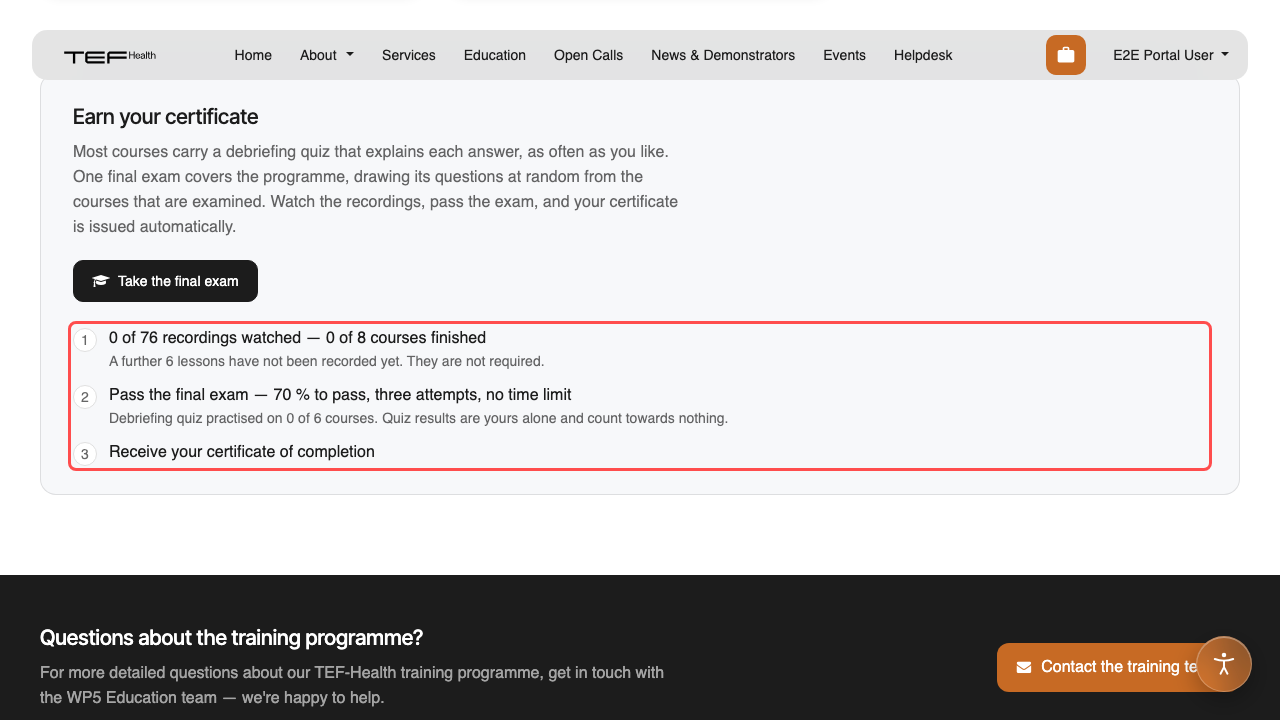
| What it takes | |
|---|---|
| 1. Watch | Every recording in the programme. A recording counts once you reach 95 % of it. |
| 2. Pass | The final exam: 70 % to pass, three attempts, no time limit. |
| 3. Receive | The certificate, issued the moment the other two are met. |
The order does not matter. Pass the exam first and finish watching later, and the certificate arrives when you finish watching.
Lessons that have not been recorded yet are not counted against you, and the page says how many there are.
Practise on each course first
Most courses carry a debriefing quiz: five questions drawn at random from that course. It is the study material, and it is where the final exam's questions come from. Where a course has no quiz, its page simply does not offer one; the recordings still count towards the certificate.
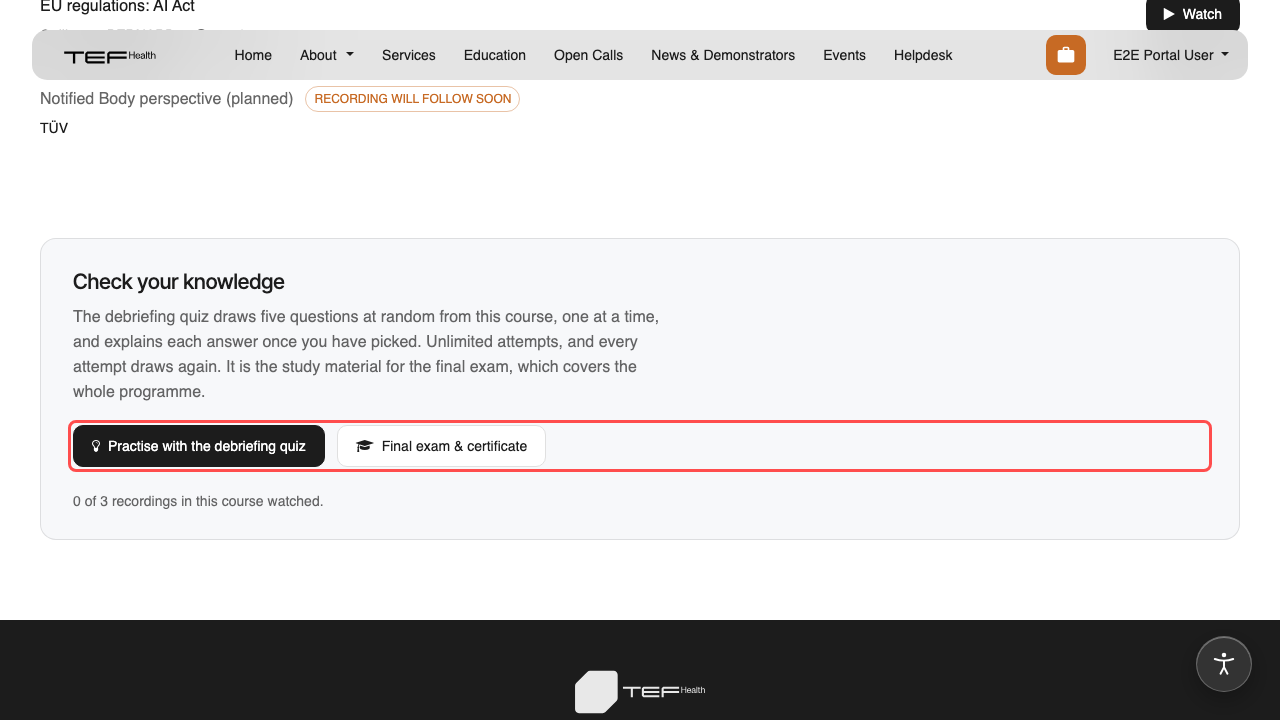
Pick an answer and the reasoning appears underneath, with the correct choice in green.
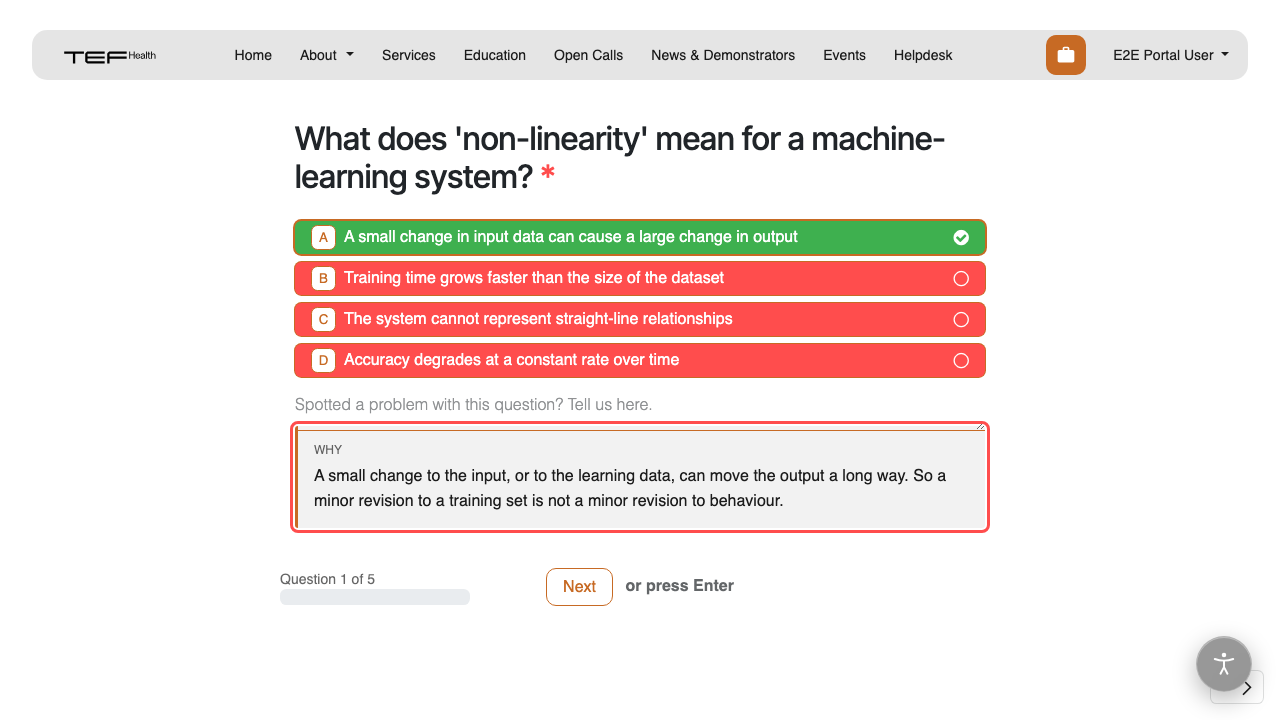
The explanation is deliberately held back until you answer. Unlimited attempts, and every attempt draws again — so re-taking a quiz is worth doing, because it asks something else.
Your own record is kept where you can see it. The course page shows how many times you have taken its quiz and your best score; the programme page counts the courses you have practised on. It goes no further than that: a quiz result is not part of the certificate and nobody else is shown it.
The final exam
| Debriefing quiz | Final exam | |
|---|---|---|
| Covers | one course | the whole programme |
| Questions | 5 drawn at random from that course | 3 drawn at random from each examined course |
| Explanation | after each answer | never |
| Attempts | unlimited | 3 |
| Pass mark | none — scored for you only | 70 % |
| Time limit | none | none |
| Certifies | no | yes |
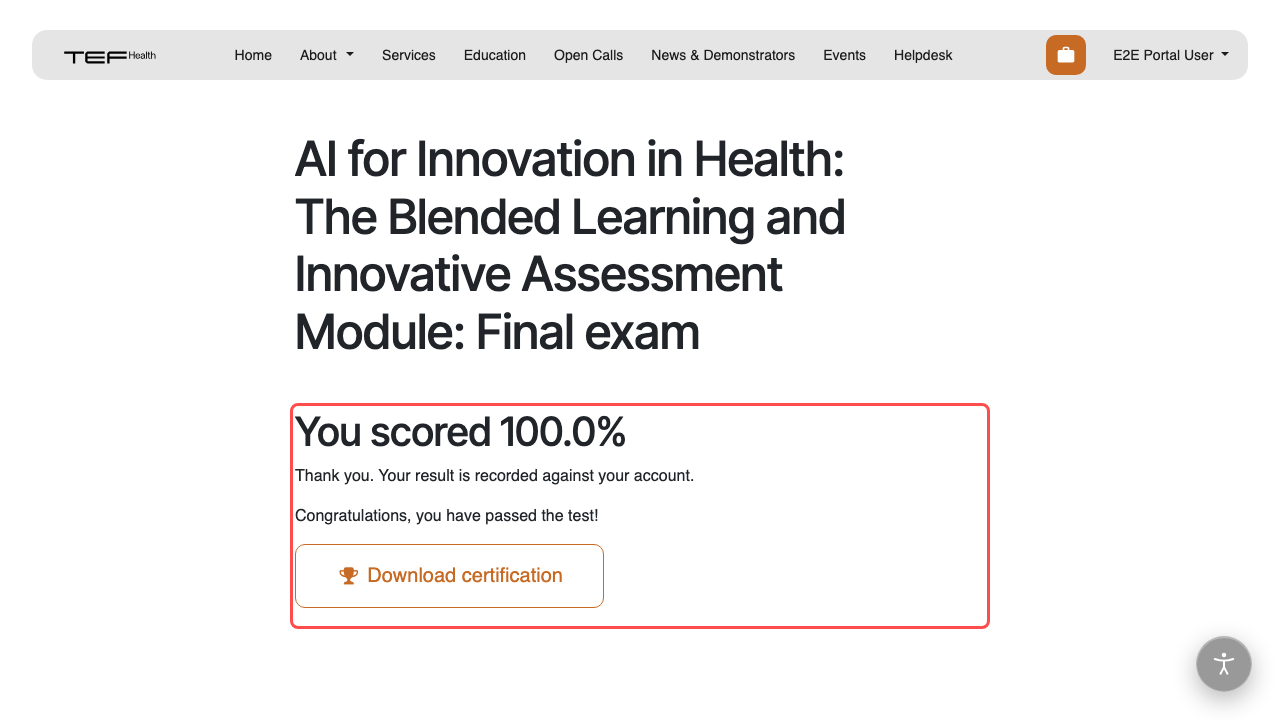
The exam asks the same material with the explanations removed. You can go back over your answers before submitting.
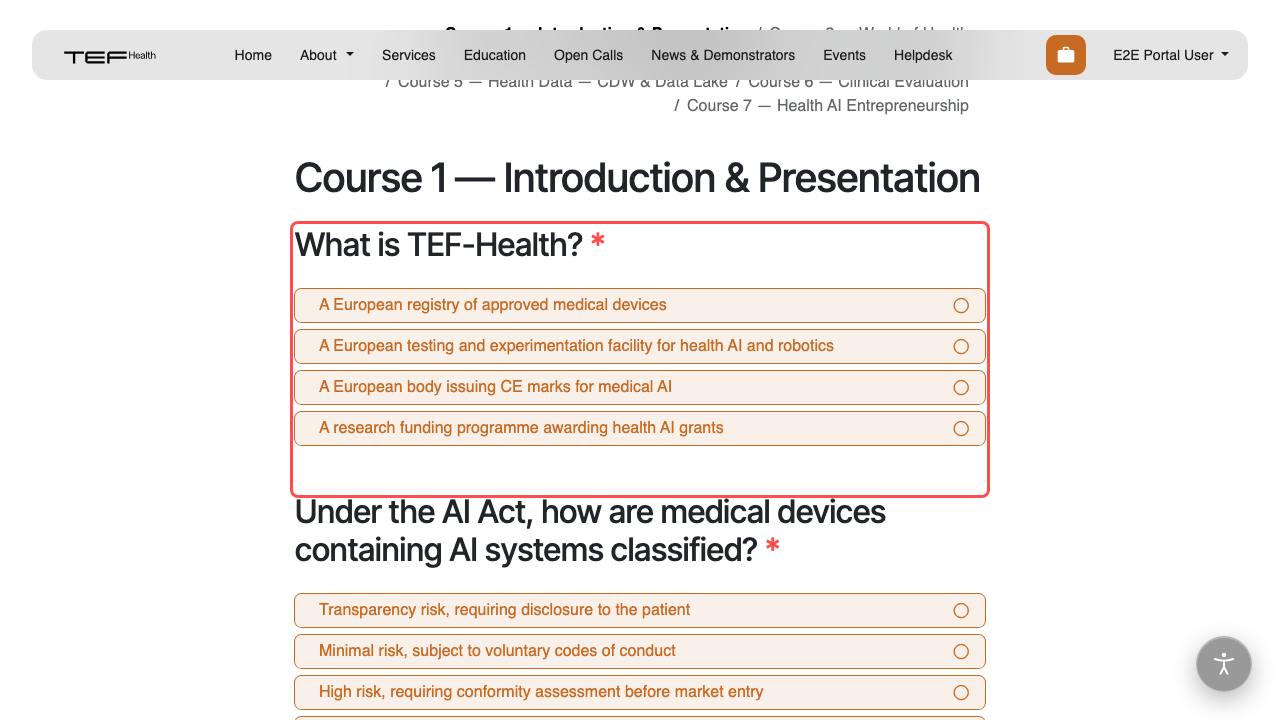
Your certificate
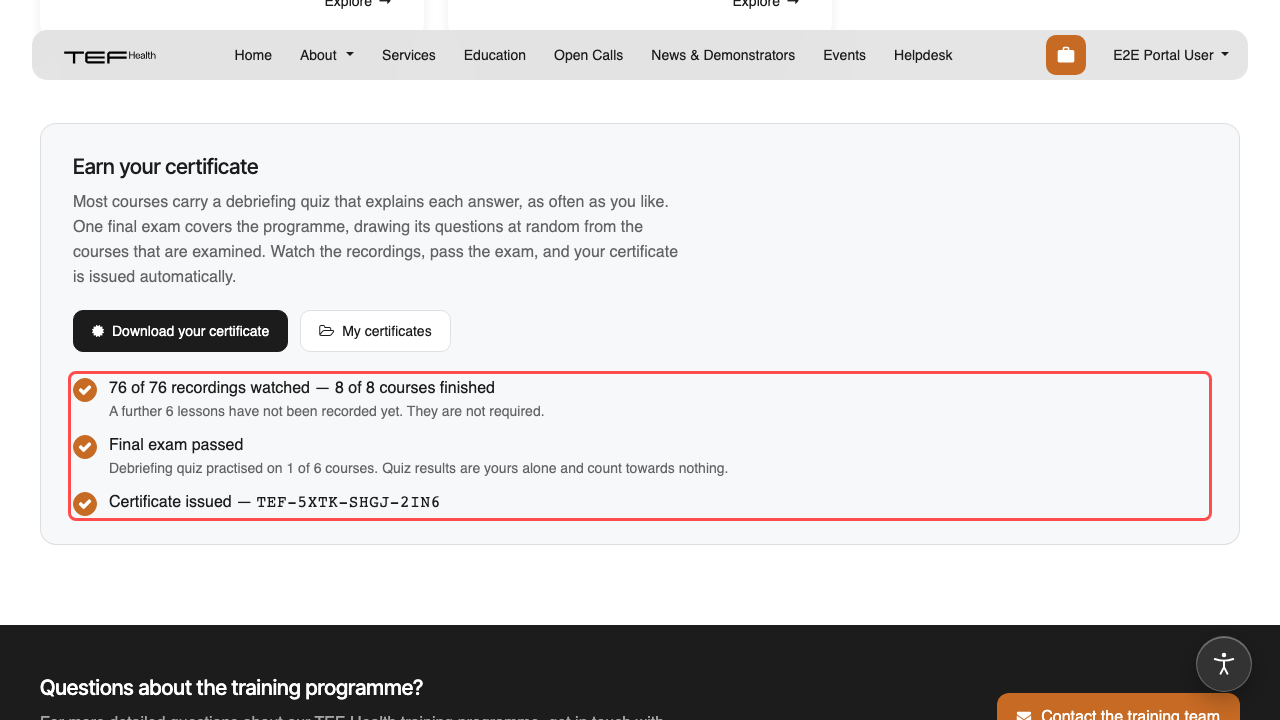
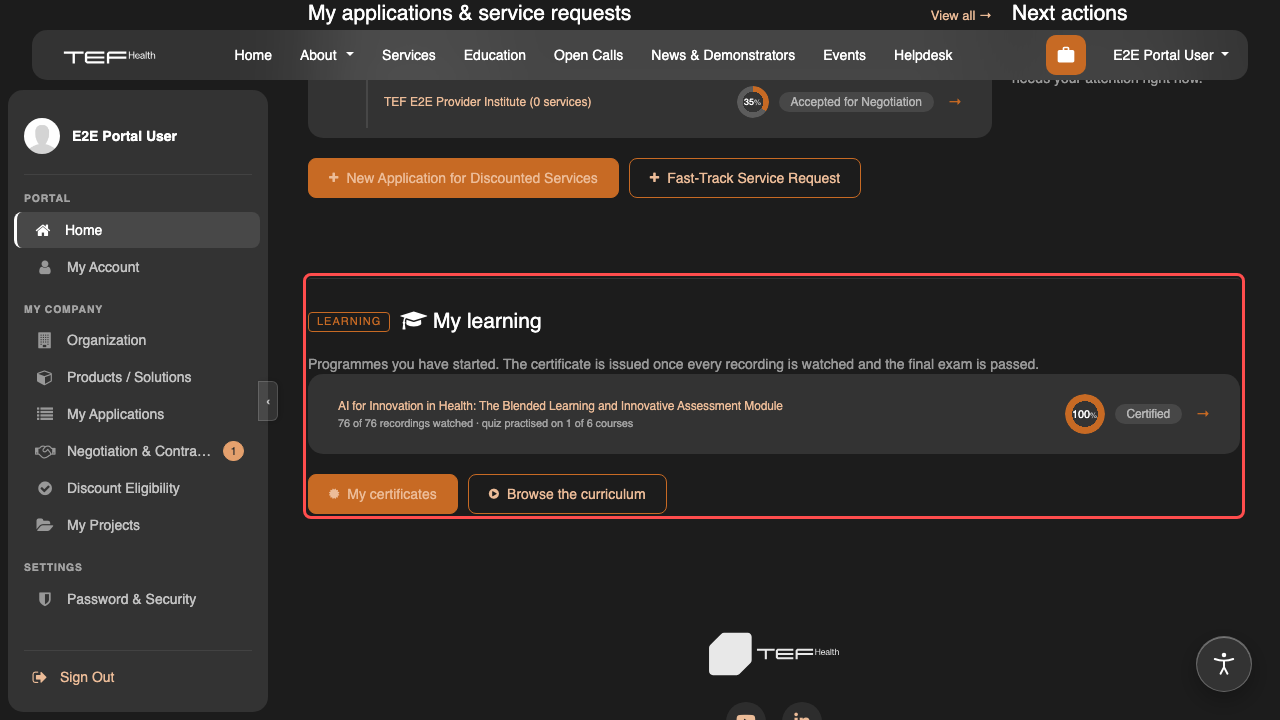
Back on the programme page, all three steps are ticked and the certificate is there to download.
It names the programme, how many courses it covered and how long they run, and carries a unique code in the form TEF-XXXX-XXXX-XXXX.
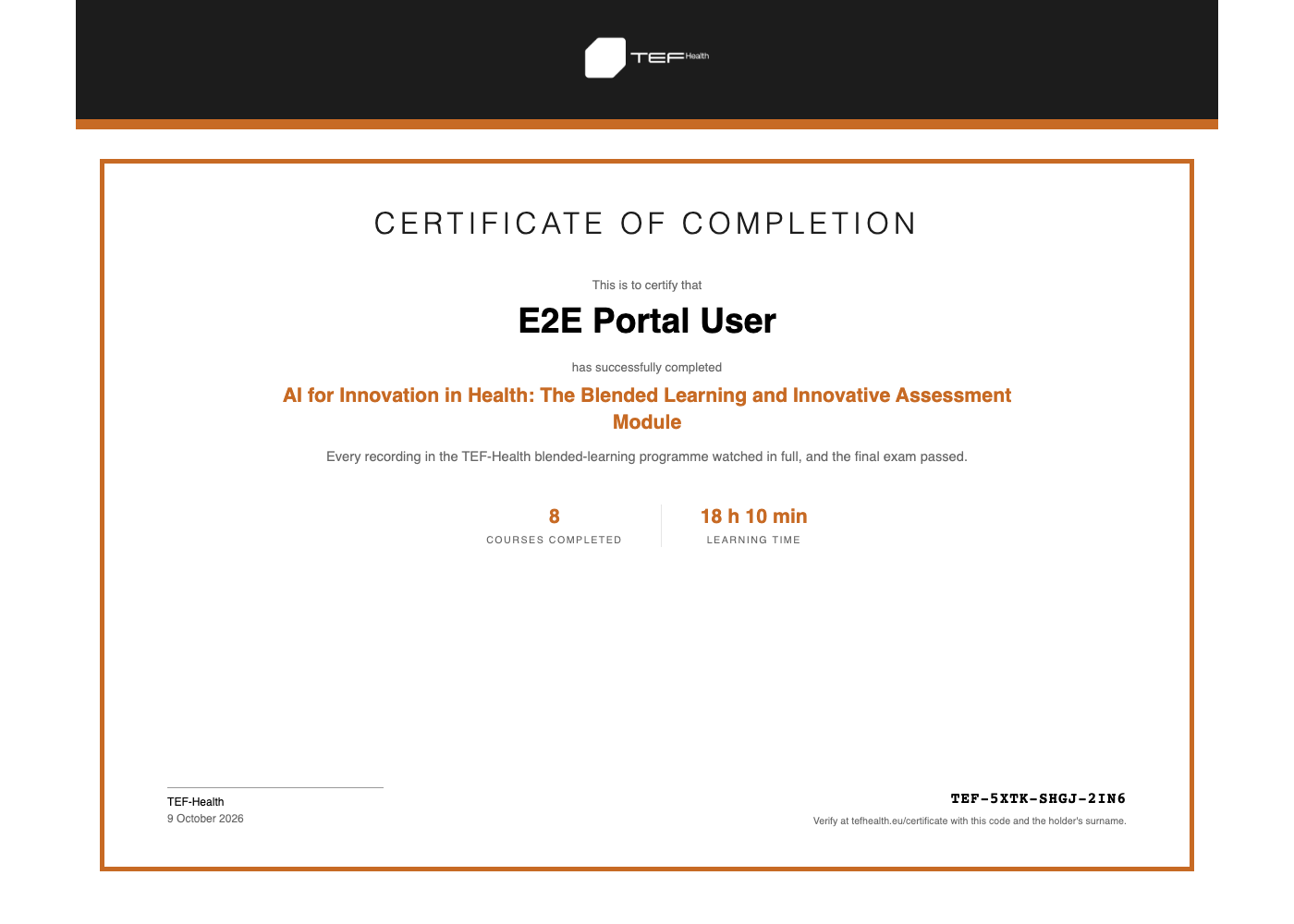
The wording is Completion, not achievement. The exam draws on the same pool as the quizzes, so it is a knowledge check rather than an assessment under exam conditions, and the certificate does not claim otherwise.
It is e-mailed to you as a PDF when it is issued. If that mail never arrives, nothing is lost: it is at /my/certificates any time.
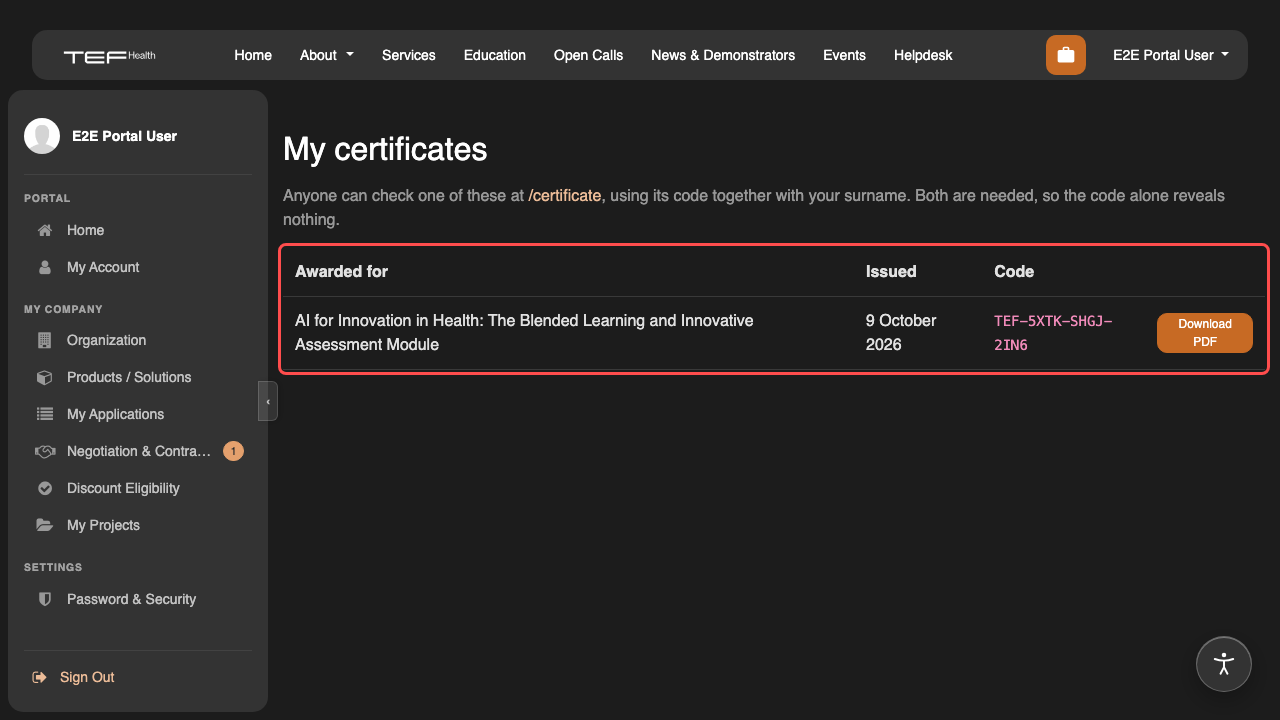
Your progress also sits on your portal dashboard, so you can pick up where you left off.
Having it checked
Anyone can verify a certificate at /certificate with two things: the code and the holder's surname.
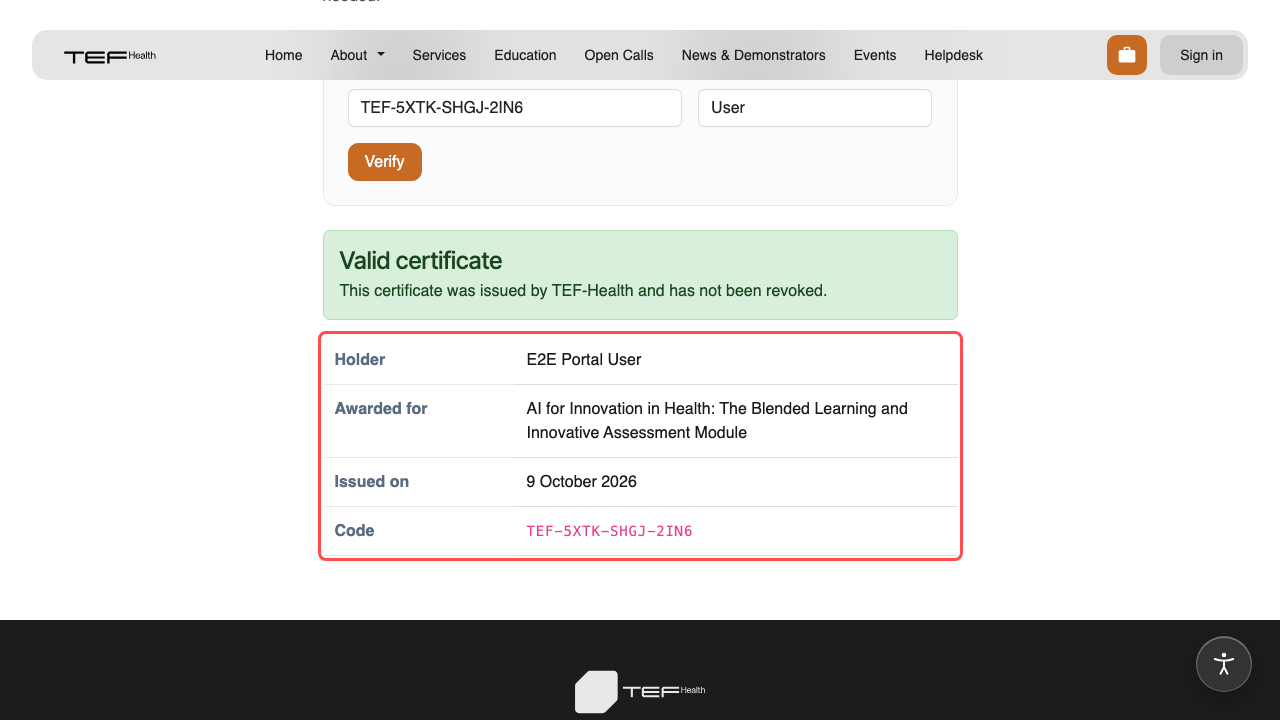
Both are needed on purpose. A code alone returns nothing, so a certificate that is forwarded, screenshotted or posted publicly does not expose whose it is. You choose who can check it by handing over both parts, which are printed together on the certificate.
A revoked or expired certificate says so rather than pretending to be valid.
If a question looks wrong
Every quiz question carries a comment box: "Spotted a problem with this question? Tell us here."
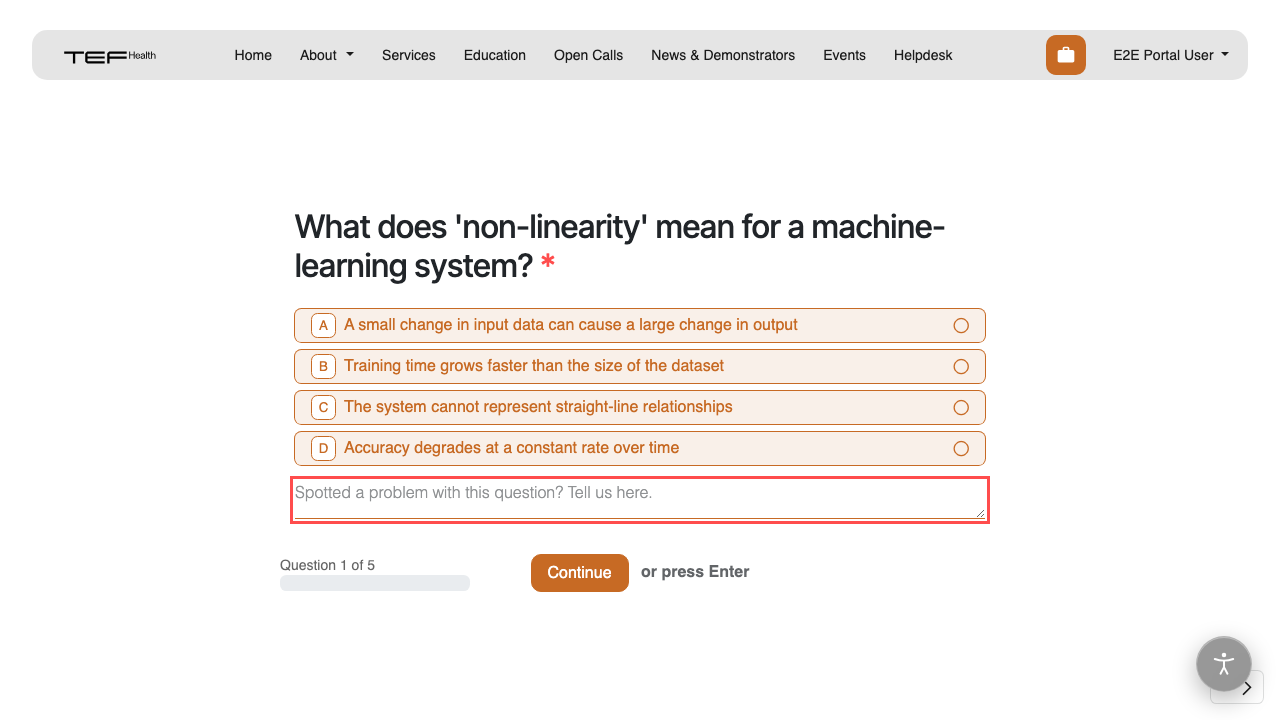
Use it for an ambiguous question, a wrong answer key, or something the recording never covered. Your note arrives attached to the exact question you were looking at, and the training team works through them after each round of review.
The box is on the quiz only. The exam has none: it is not the place to argue with a question, and anything worth saying about a question is worth saying while you still have the explanation in front of you.